Ecology Specialty
SSI Shark Ecology
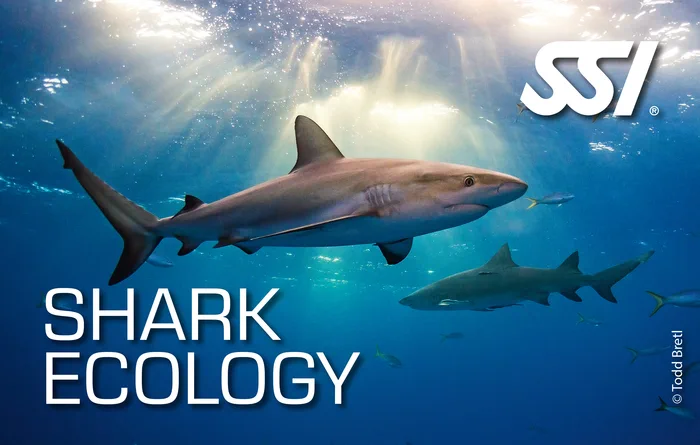
Andaman Sea has consistent, reliable shark encounters — grey reef sharks on channel dives, white tips resting on ledges, occasional hammerheads at depth. The Shark Ecology course teaches you what you are actually looking at: species identification, behaviour patterns and why sharks matter to the reef.
Shark Ecology — Key Facts
1 day
Duration and Structure
- Digital learning : Shark biology, behaviour and conservation
- Training dives : Two to three guided dives at shark encounter sites
- Identification : Species recognition in the field
- Debrief : Behaviours observed discussed after each dive
Age 10+
Prerequisites
- Certification : Open Water Diver or equivalent
- Age : Minimum 10 years
- Note : Deeper sites require minimum 12 years and additional depth experience
Understand apex predators
What You Get
- Identify shark species found in the Andaman Sea
- Read shark body language and approach signals
- Understand the ecological role of sharks in reef systems
- Learn the conservation challenges facing shark populations
Sharks in the Andaman Sea
What You Will See and What It Means
Grey reef sharks are the most commonly encountered species — active, fast and easy to observe on channel dives. White tip reef sharks tend to rest during the day and are found on ledges and sandy patches. The course teaches you to distinguish between them, read their posture and understand what drives their behaviour at different times and sites.
- Species identification — grey reef, white tip, black tip and others present
- Behaviour reading — feeding, patrolling, resting and social displays
- Trophic role — how apex predators regulate prey populations and reef health
- Conservation status — global shark population declines and Thai marine protections
- Responsible encounters — approach, positioning and respectful observation