SSI Sea Turtle Ecology
Turtle encounters are part of the appeal of many Andaman Sea reefs, including Surin Islands turtles when conditions and routes line up. The Sea Turtle Ecology course takes those encounters from coincidence to understanding — species identification, life history, behaviour and the conservation pressures these animals face globally.
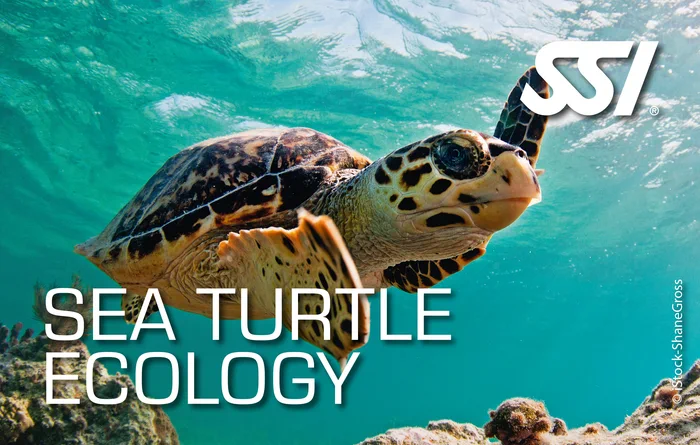
Sea Turtle Ecology — Key Facts
Duration and Structure
- Digital learning : Turtle biology, life history and conservation
- Training dives : Two to three dives at reef sites with resident turtles
- Identification : Species differentiation and individual recognition
- Debrief : Behaviour and context discussed after each dive
Prerequisites
- Certification : Open Water Diver or equivalent
- Age : Minimum 10 years
- Note : Snorkellers can also complete the academic component
What You Get
- Identify green and hawksbill turtles found in Thailand
- Understand foraging, resting and nesting behaviour
- Learn how to observe without causing disturbance
- Understand the main threats to sea turtle populations globally
Green Turtles and Hawksbills in the Andaman Sea
Green turtles are the more commonly seen species around Khao Lak — larger, rounder in profile, and often found grazing on seagrass or resting on the reef. Hawksbills are smaller, with a narrower pointed beak, and specialise in feeding on sponges in reef crevices. The course teaches you to distinguish them reliably, understand why they use different habitat zones and read what they are doing when you encounter them.
- Species ID — green vs hawksbill: head shape, shell pattern, size and habitat
- Foraging behaviour — seagrass grazing, sponge feeding and coral biting
- Resting sites — where and why turtles choose specific ledges and caverns
- Nesting biology — beach nesting, temperature-dependent sex determination
- Interaction guidelines — safe distances, no chasing and surfacing behaviour