Ecology Specialty
SSI Marine Mammal Ecology
Thai Andaman waters can include dolphins and other large marine-life encounters, with sightings varying by season and route. Marine Mammal Ecology teaches you the biology behind these encounters — species identification, acoustic communication, social structure and the science that guides responsible observation.
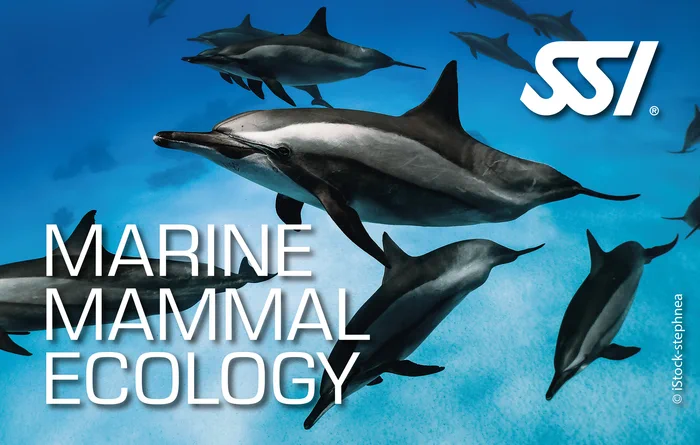
Marine Mammal Ecology — Key Facts
1 day
Duration and Structure
- Digital learning : Marine mammal biology, behaviour and conservation
- Training dives : One to two dives at open water and reef sites
- Surface observations : Dolphin and whale watching protocols
- Debrief : Encounters and behaviour discussed after each session
Age 10+
Prerequisites
- Certification : Open Water Diver or equivalent
- Age : Minimum 10 years
- Note : Some content works for non-divers as a boat-based observation course
Open ocean encounters
What You Get
- Identify cetacean species found in Thai Andaman waters
- Understand dolphin social structure and communication
- Learn responsible approach and observation protocols
- Understand conservation threats and current research
What You Will See
Dolphins, Sperm Whales and Whale Sharks
Dolphin sightings are possible in Thai Andaman waters, sometimes encountered offshore when season and conditions line up. Other marine mammal sightings are possible in the wider Andaman Sea but are never guaranteed. Whale sharks, though technically fish, are discussed in this course given their ecological similarity to marine mammals in terms of size, behaviour and the human encounters they generate.
- Spinner dolphins — identification, pod structure, feeding behaviour and leaping displays
- Sperm whales — deep diving physiology, echolocation and cultural behaviour
- Whale sharks — filter feeding, aggregation sites and individual identification
- Acoustic ecology — how cetaceans use sound and how noise pollution affects them
- Responsible interaction — approach distances, no touching protocols and impact minimisation