Ecology Specialty
SSI Marine Invertebrate Ecology
Fish get most of the attention on a reef dive. But the animals doing much of the ecological work are invertebrates — sea stars recycling nutrients, urchins grazing algae, shrimp cleaning wounds, octopus controlling crustacean populations. This course teaches you to identify the main groups and understand what they are doing.
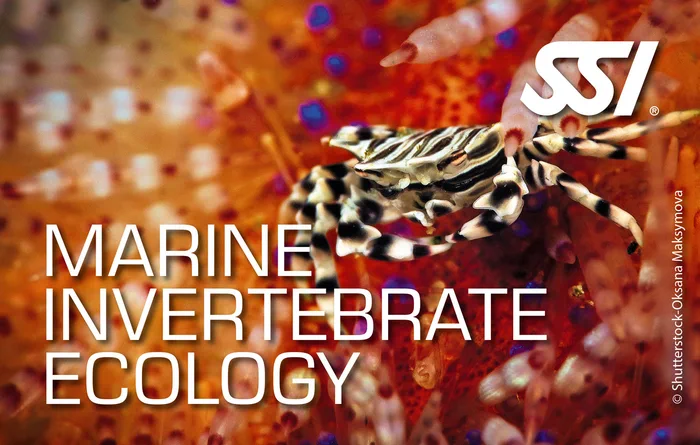
Marine Invertebrate Ecology — Key Facts
1 day
Duration and Structure
- Digital learning : Invertebrate phyla, identification and ecology
- Training dives : Two to three guided observation dives
- Identification : Major groups encountered in the Andaman Sea reefs
- Debrief : Ecological roles and behaviours discussed after each dive
Age 10+
Prerequisites
- Certification : Open Water Diver or equivalent
- Age : Minimum 10 years
- Equipment : Standard dive gear, identification slate provided
See beyond the fish
What You Get
- Identify the main invertebrate phyla found in the Andaman Sea reefs
- Understand the ecological roles of key invertebrate groups
- Recognise indicator species for reef condition assessment
- Observe cryptic and nocturnal invertebrates with targeted technique
Phyla by Phyla
The Groups That Run the Reef
Invertebrates account for the vast majority of animal species on a coral reef. The course covers the main groups you encounter in the Andaman Sea reef dives — their basic biology, how to recognise them, and what role they play in the ecosystem.
- Echinoderms — sea stars, urchins, sea cucumbers and feather stars and their ecological roles
- Crustaceans — mantis shrimp, decorator crabs, cleaner shrimp and banded coral shrimp
- Molluscs — octopus, cuttlefish, giant clams and cone snails
- Worms — Christmas tree worms, feather dusters and fireworms
- Cnidarians — anemones, hydroids and the difference from reef-building corals