SSI Manta Ray Ecology
Thailand has some of the best manta ray diving in the world, and Koh Bon manta rays are a major reason divers plan offshore routes from Khao Lak. The Manta Ray Ecology course teaches you the science behind the encounters — species identification, cleaning station behaviour, seasonal feeding aggregations and what long-term population research tells us about these extraordinary animals.
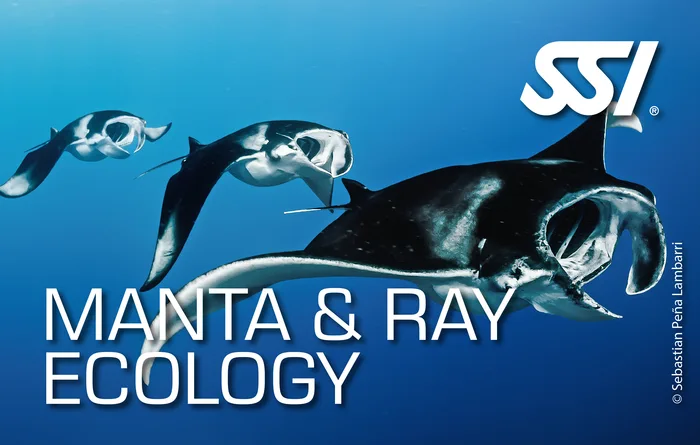
Manta Ray Ecology — Key Facts
Duration and Structure
- Digital learning : Manta biology, identification and conservation
- Training dives : Two to three dives at manta encounter sites
- Identification : Individual photo-ID techniques using belly spot patterns
- Debrief : Behaviours observed discussed in detail after each dive
Prerequisites
- Certification : Open Water Diver or equivalent
- Age : Minimum 10 years
- Note : Manta encounters depend on seasonal patterns and site conditions
What You Get
- Distinguish reef mantas from oceanic mantas
- Understand cleaning station dynamics and behaviour
- Learn individual identification methods used by researchers
- Understand the conservation status and threats to manta populations
Two Types of Manta Encounters in Thailand
Reef mantas visit cleaning stations where cleaner wrasse remove parasites and dead skin tissue. These stations are predictable sites where calm, patient observation produces long, close encounters. Separately, feeding aggregations occur when plankton blooms concentrate in specific channels — mantas circle-feeding in formation, sometimes in groups of twenty or more.
- Species — reef manta (Mobula alfredi) vs oceanic manta (Mobula birostris)
- Photo-ID — using unique belly spot patterns to identify individuals
- Cleaning behaviour — selecting cleaners, hovering posture and exit signals
- Feeding aggregations — plankton blooms, barrel rolls and socialising behaviour
- Approach etiquette — positioning, movement and minimising disturbance